
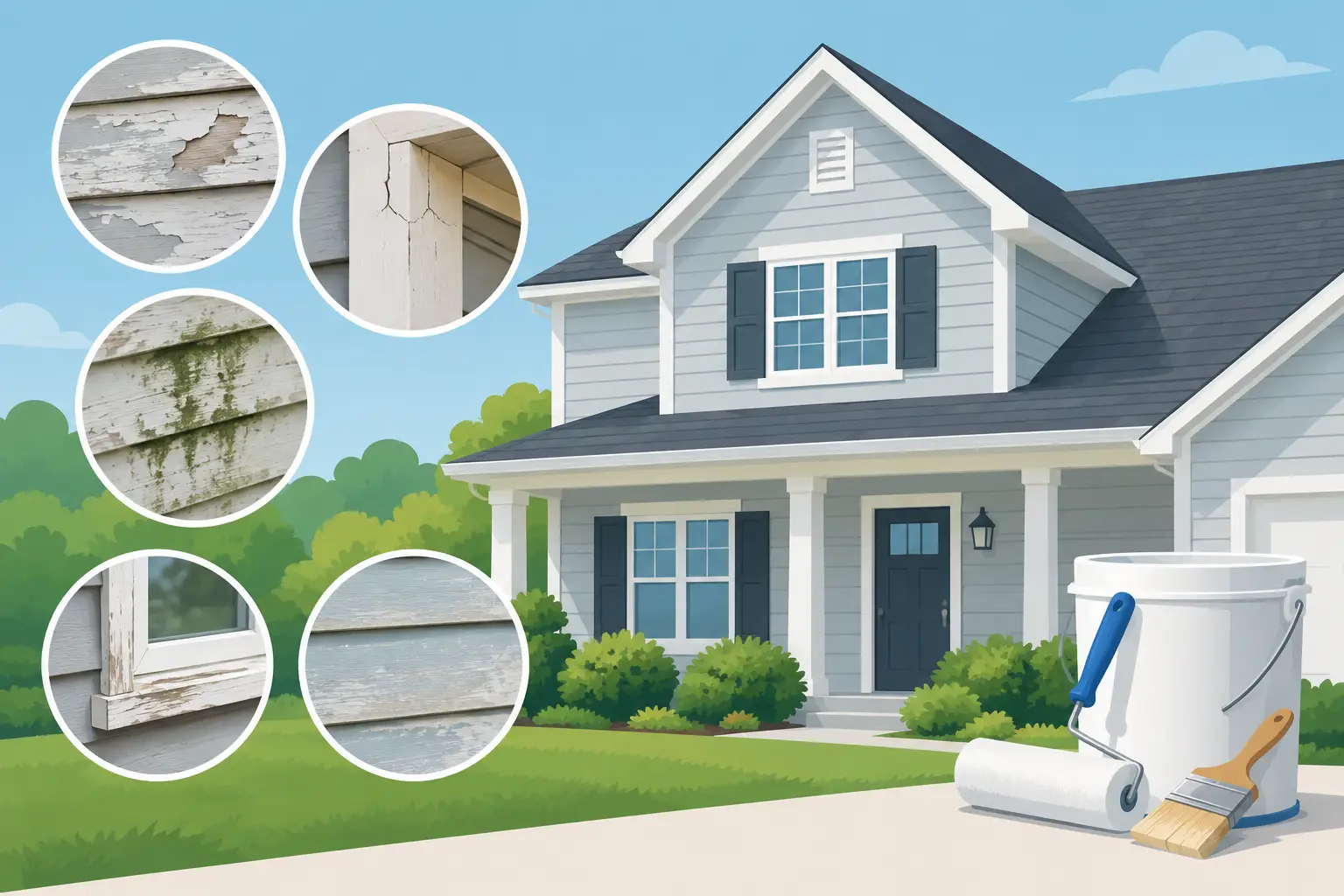
A faded wall can be easy to dismiss until the rest of the property starts to look tired beside it. But the most useful signs your exterior needs painting are not always cosmetic. Paint is the first protective layer between your home or building and sun, rain, moisture, wind, and salt-laden coastal air. When that layer starts to fail, small surface issues can become more involved repairs.
For properties across Sydney’s Northern Beaches, exterior maintenance is especially worth staying ahead of. Exposure varies from street to street: a sheltered elevation may still look sound while a sun-facing wall, balcony railing, or weatherboard section is already showing wear. Here is what to look for before delaying a repaint costs more than it should.
Signs Your Exterior Needs Painting: A Closer Look
1. Peeling, flaking, or bubbling paint
Paint should form a firm, even coating. When it lifts, flakes away, or develops bubbles, it is no longer properly bonded to the surface underneath. Peeling can result from age, moisture getting behind the coating, poor preparation during an earlier paint job, or repeated exposure to harsh weather.
This is more than a visual problem. Bare timber can absorb moisture, and exposed metal may begin to corrode. A professional painter will not simply paint over loose edges. The failed coating needs to be scraped or sanded back, the cause of the failure assessed, and the area correctly primed before new paint is applied.
2. Fading that makes the property look uneven
Strong sunlight gradually breaks down paint pigments, particularly on exposed walls, fascias, garage doors, and fences. Dark colors and bright shades can show fading sooner, but even neutral finishes eventually lose depth and consistency.
A little softening of color is normal. The concern is when one side of the building looks noticeably different from another, or when the original shade is visible behind a removed fixture, sign, or downpipe. Repainting restores curb appeal, but it also provides an opportunity to choose a finish better suited to the amount of sun the surface receives.
3. Chalky residue comes off on your hand
Run your hand across a painted wall. If it leaves a powdery residue on your fingers, the paint may be chalking. This happens as binders within the coating degrade over time, leaving pigment on the surface.
Chalking is common on older exterior paint, and early-stage chalking does not always mean every surface needs immediate repainting. However, heavy residue must be thoroughly cleaned and stabilized before applying another coat. Painting straight over a chalky wall can prevent proper adhesion and shorten the life of the new finish.
4. Cracks are appearing in the paint film or caulking
Fine cracks in paint may begin as a surface issue, but they create pathways for water to enter. Cracked caulking around window frames, doors, trim, and joints can be just as significant, especially on elevations exposed to driving rain.
Not every crack has the same cause. Hairline paint cracks can come from a brittle, aging coating, while wider or repeated cracks may point to movement in timber, render, or masonry. A careful inspection helps separate routine paint preparation from repairs that should be completed first. Addressing the underlying issue is what gives a repaint a clean, lasting result.
5. Timber looks dry, split, or exposed
Weatherboards, fascia boards, timber trims, decks, and eaves need particular attention. When paint wears thin, timber can look dry or rough, develop splits, or darken in patches as moisture penetrates the grain.
A repaint can protect sound timber, but severely deteriorated sections may need repair or replacement before painting begins. This is one reason exterior painting should start with detailed surface preparation rather than a quick coat for appearance alone. Proper filling, sanding, priming, and sealing make a visible difference and help protect the work beneath the paint.
6. Rust stains are showing on metal surfaces
Rust-colored streaks on railings, gates, steel posts, balustrades, or metal window components should be dealt with promptly. Once corrosion starts, painting over it without preparation only hides the problem for a short time.
The appropriate approach depends on how far the corrosion has progressed. Light surface rust can often be removed, treated, and primed with the right metal coating system. Deep pitting or weakened metal may require additional repair. In coastal areas, salt exposure makes regular checks of painted metalwork particularly worthwhile.
7. Mold, mildew, or recurring dark staining is visible
Shaded walls, soffits, areas near trees, and poorly ventilated sections of a building can develop mold, mildew, algae, or persistent dark staining. These marks may return after a basic wash if moisture conditions are not considered.
Cleaning is an essential first step, but the surface must be dry and properly prepared before repainting. It is also worth checking for leaking gutters, blocked drainage, or water runoff that is repeatedly wetting the wall. High-quality exterior paint can help resist future growth, yet it cannot solve an ongoing moisture source by itself.
8. The paint feels rough, worn, or patchy
Sometimes the clearest warning is not dramatic damage but a finish that no longer feels protected. Paint may look thin around corners and edges, feel rough to the touch, or show patchy repairs where different sheens and colors no longer match.
This is often the right point to plan a repaint. Waiting until paint fully peels can increase the amount of scraping, sanding, priming, and repair required. A timely project is usually more straightforward, and it lets the finished exterior look consistent rather than repeatedly patched.
9. It has been longer than your exterior’s expected paint cycle
There is no single repainting schedule for every property. Paint longevity depends on the surface material, product quality, preparation, color, weather exposure, and maintenance. Sheltered brickwork may hold up well for years, while painted timber facing direct sun or salty air may need attention sooner.
As a general rule, an exterior that has not been assessed for several years should not be judged by age alone. Walk around the property after rain, look closely at exposed elevations, and inspect trims, gutters, decks, fences, and railings. Early maintenance can extend the useful life of the coating and reduce avoidable repair work.
What a Proper Exterior Repaint Should Include
A durable result begins well before the first finish coat. Surfaces should be washed, loose paint removed, cracks and imperfections repaired, and suitable primers applied where needed. Fixtures, windows, landscaping, and surrounding areas also need to be protected so the work site remains orderly throughout the project.
Product selection matters as much as application. The right exterior coating system should suit the material – whether timber, render, masonry, or metal – and the conditions it faces. A lower upfront price can be appealing, but skipping preparation or using an unsuitable product often leads to premature failure and a sooner-than-expected repaint.
For homeowners, landlords, and property managers, the practical goal is simple: a clean finish that looks polished and continues protecting the building. Clear communication about repairs, color choices, timing, and pricing makes that process far less disruptive.
If you are noticing several of these warning signs, arrange an exterior assessment while the issues are still manageable. A well-prepared repaint can restore the property’s appearance, protect vulnerable surfaces, and give you confidence when the next stretch of coastal weather arrives.