
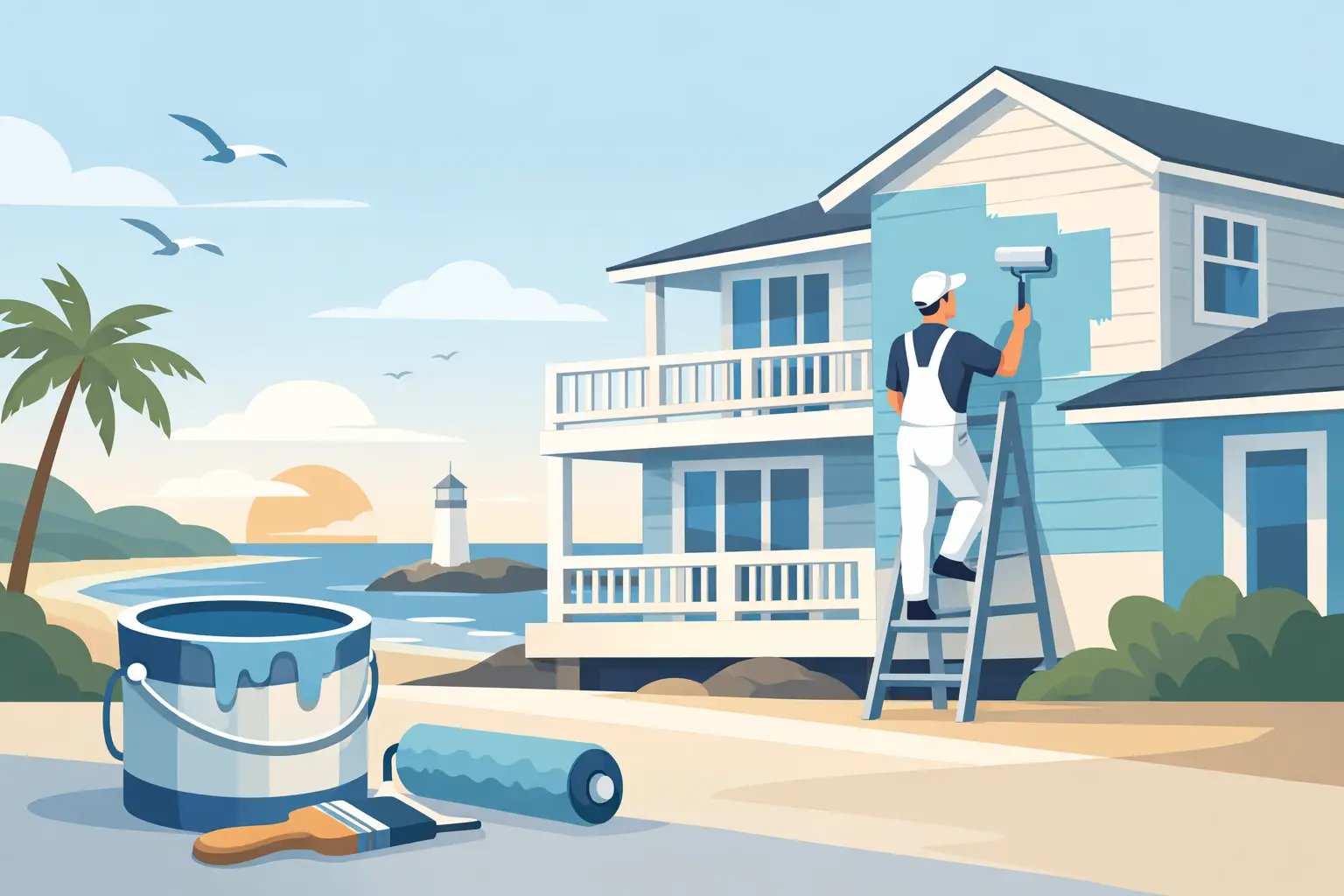
Salt spray settles where you cannot always see it: beneath eaves, on window trim, around gutters, and across the sunny side of a home. On Sydney’s Northern Beaches, that salt combines with strong UV exposure, wind-driven rain, and humidity to make exterior paint work harder. The best paint for coastal homes is not simply the most expensive can on the shelf. It is a complete system of suitable coatings, correct preparation, and careful application.
A fresh exterior can transform a property, but coastal paintwork must also act as protection. The right choices help preserve timber, masonry, metalwork, and trim while keeping the home looking clean and well cared for between maintenance cycles.
What Coastal Conditions Do to Exterior Paint
Coastal homes face several forms of wear at once. Salt particles attract moisture and can remain on painted surfaces long after a sea breeze has passed. If they are painted over or allowed to build up, they can interfere with adhesion and accelerate peeling, blistering, and corrosion.
Sun is another major factor. Ultraviolet exposure gradually breaks down paint binders, causing color fading, chalking, and a dull finish. Dark colors and highly exposed walls often show this first, particularly on north- and west-facing elevations. Add changing temperatures, damp mornings, and occasional heavy rain, and small cracks can quickly become pathways for moisture.
This does not mean a coastal home needs an exotic coating for every surface. It means the coating needs to suit the substrate, and the substrate must be clean, dry, sound, and properly primed before the first finish coat is applied.
The Best Paint for Coastal Homes Starts With Acrylic
For most painted exterior walls, trims, and cladding, a premium 100% acrylic exterior paint is the most dependable choice. Quality acrylic paints remain flexible as temperatures change, resist UV damage well, and allow moisture vapor to escape more effectively than many older oil-based systems. That flexibility matters on timber weatherboards and exterior trim, which naturally expand and contract.
Look for an exterior product designed for high UV exposure, moisture resistance, and long-term color retention. A low-sheen or satin finish is often an excellent choice for exterior walls because it balances a refined appearance with practical washability. It also disguises minor surface variation better than higher-gloss finishes.
For timber windows, doors, fascia, and detailed trim, a premium acrylic enamel or water-based trim paint can provide a smoother, more durable finish. These products are often easier to maintain than traditional oil-based coatings and are less prone to yellowing. However, product selection should always follow the existing coating and the manufacturer’s preparation requirements. A finish that performs beautifully over a sound acrylic base may not be suitable over failing oil paint without the right primer.
When Elastomeric Paint Makes Sense
Elastomeric masonry coatings can be useful on rendered walls, concrete, and other stable masonry surfaces with fine hairline cracking. They create a thicker, flexible membrane that helps keep water out while bridging very small surface cracks.
They are not a universal answer. Elastomeric coatings can trap moisture when applied to a damp wall or a surface with an unresolved water issue. They are also generally not appropriate for timber, which moves differently from masonry. Before specifying this type of coating, a painter should assess the wall condition, drainage, cracking, and any signs of rising or penetrating damp.
Match the Coating to the Surface
There is no single best paint product for every part of a coastal property. Exterior painting lasts when each surface receives the right preparation and coating system.
Masonry, render, and fiber cement
These surfaces usually perform well with premium exterior acrylic paint, applied over an appropriate sealer or primer where needed. New render must cure properly before painting, and chalky or powdery walls need thorough treatment before any topcoat goes on. Paint alone cannot correct loose render, active cracking, or moisture entering through failed flashing.
Timber weatherboards and trim
Timber needs a flexible coating system and close attention to exposed edges, joints, and end grain. Bare timber should be primed promptly, particularly around cut ends and repairs, where moisture can enter most easily. Caulking gaps is helpful, but it should be used selectively. Sealing every joint can restrict necessary movement or conceal a problem that needs repair first.
Metal railings, gates, and gutters
Salt air is especially unforgiving on metal. Any rust must be removed or treated correctly before repainting, then covered with a suitable metal primer and durable topcoat. Painting over surface corrosion may improve appearance briefly, but it will not stop rust from continuing beneath the coating.
Decks and exterior floors
Decking requires a different approach from walls. A deck stain or dedicated exterior deck coating is often more suitable than standard house paint because it is designed for foot traffic and timber movement. The best option depends on whether the goal is to retain visible grain, cover an aged surface, or protect a previously painted deck. In shaded coastal areas, slip resistance and mold resistance also deserve attention.
Finish and Color Choices That Hold Up Better
Sheen affects both appearance and maintenance. Flat finishes can look elegant on broad masonry walls but tend to hold dirt and can be harder to clean. Low-sheen finishes are a practical middle ground for most exterior walls. Satin and semi-gloss finishes are commonly reserved for doors, window frames, fascia, and trim because they are more washable and emphasize architectural detail.
Color is not just a design decision on the coast. Very dark colors absorb more heat, which can place extra stress on timber, certain cladding materials, and older paint layers. Strong reds, bright yellows, and some deep blues can also fade faster in direct sun, depending on the pigment quality and exposure. This does not rule them out, but it may mean choosing a premium color formulation and accepting more frequent maintenance on highly exposed areas.
Lighter neutrals, soft whites, and muted coastal tones often weather more gracefully while complementing the relaxed character of homes in areas such as Manly, Mona Vale, and Narrabeen Beach. A professional color consultation can help balance personal taste, surrounding architecture, roof color, and the practical realities of sun exposure.
Preparation Is the Part That Determines Longevity
Even the highest-quality paint will fail early if applied over salt residue, chalking, loose paint, mold, or damp surfaces. Thorough preparation is where long-lasting results are won.
Exterior surfaces should be washed to remove salt, grime, mildew, and loose contaminants. Depending on the substrate, this may involve careful pressure washing or hand washing with an appropriate cleaning solution. The surface then needs enough drying time before sanding, patching, priming, and painting begin.
Failing paint should be scraped and sanded back to a firm edge. Cracks, holes, and damaged timber should be repaired rather than simply coated over. Bare patches need the correct primer, while glossy existing coatings may require sanding to provide a sound key for the new paint. These steps take time, but they are what prevent the frustrating sight of fresh paint lifting within a season or two.
Application conditions matter as well. Painting in direct harsh sun, on a hot surface, before rain, or during high humidity can affect drying and adhesion. A professional painting team plans the work around the forecast, protects surrounding areas, and applies the recommended number of coats at the correct spread rate. One thin coat may look acceptable on the day, but it will rarely provide the coverage or protection a coastal exterior needs.
Protect the Paint Between Repaints
Coastal maintenance is simpler and less expensive when it is regular. Rinsing external surfaces with fresh water helps remove salt buildup, especially on exposed railings, window frames, doors, and eaves. It is also worth checking for cracked caulk, peeling edges, blocked gutters, rust spots, and signs of water entering around windows or rooflines.
Most homes benefit from an annual exterior inspection and a gentle wash. The repainting schedule depends on the surface, color, exposure, previous preparation, and coating quality. A sheltered wall may stay in excellent condition for years, while a sun-baked ocean-facing elevation may need attention much sooner. Addressing small areas early protects the larger paint system and avoids more extensive repairs later.
A well-painted coastal home should look polished, but it should also feel protected. When the right paint is matched to the surface and applied over careful preparation, your exterior is better equipped to handle the salt, sun, and weather that come with living close to the water. If you are unsure what is currently on your home or why a finish is failing, a detailed on-site assessment is the right place to begin.