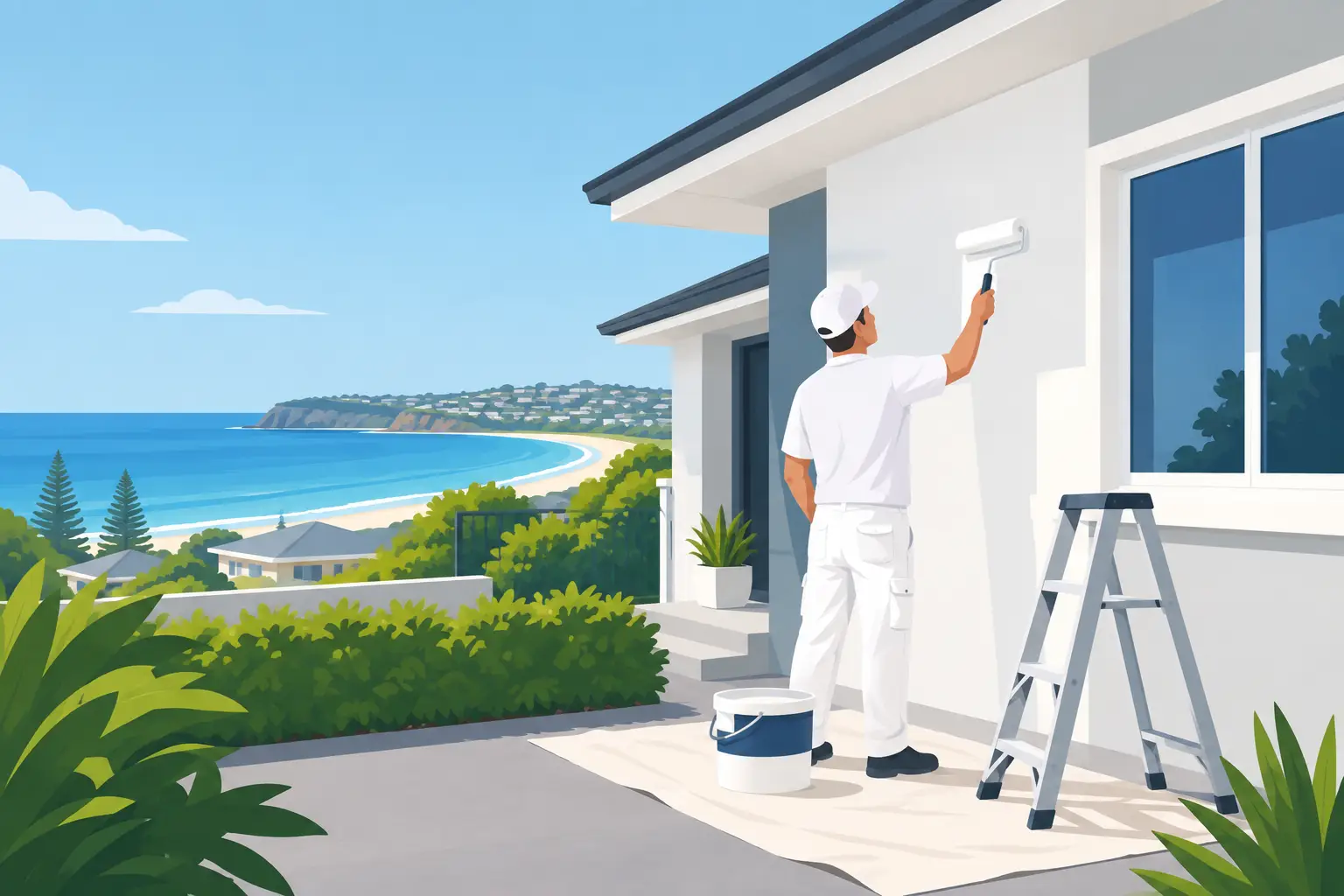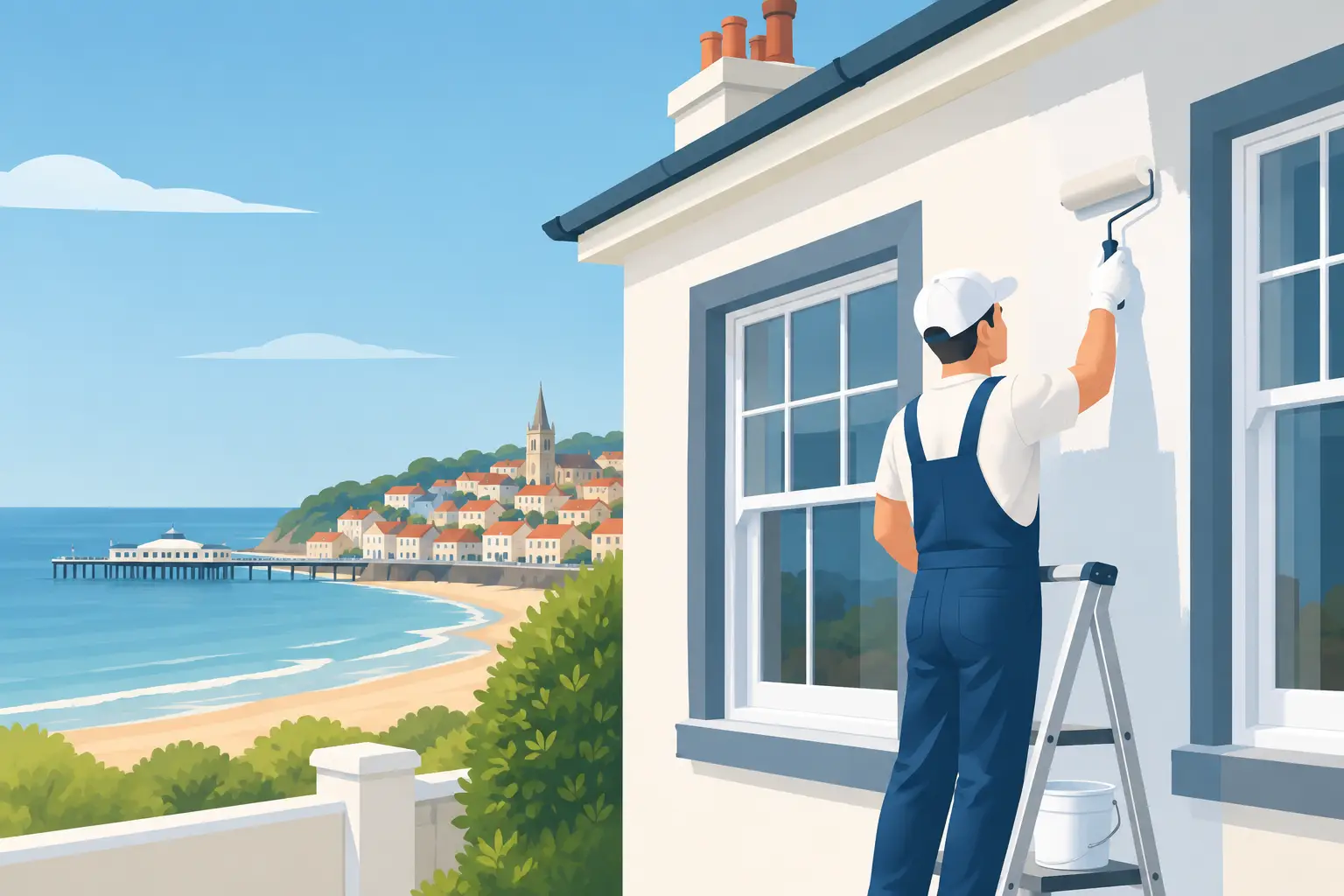

A fresh coastal paint job can lose its finish far sooner than expected when salt settles on the exterior every day. If you are asking which paint resists salt air, the practical answer is a premium exterior 100% acrylic coating applied over correctly cleaned, repaired, and primed surfaces. The paint matters, but the complete coating system and the preparation behind it determine how long the result stays looking sharp.
For homes near Manly, Mona Vale, Dee Why, Narrabeen Beach, and other exposed Northern Beaches locations, exterior painting is not simply about choosing a color. It is protective maintenance. Salt, moisture, wind, strong sun, and airborne grit can gradually break down a coating, especially on elevations facing the ocean.
Which Paint Resists Salt Air Best?
For most coastal houses, a high-quality, exterior-grade 100% acrylic paint is the most dependable choice. These coatings remain more flexible than many older oil-based products, so they can better accommodate the expansion and contraction caused by heat, moisture, and changing weather. They also offer strong resistance to ultraviolet exposure, helping colors and protective binders hold up in harsh sunlight.
A premium acrylic exterior paint is suitable for common residential surfaces such as previously painted timber, fiber cement, masonry, rendered walls, and properly prepared exterior trim. The key phrase is properly prepared. Even an excellent topcoat can fail early if salt residue, chalking paint, rust, mold, or loose material is left underneath.
For metalwork, the answer is more specific. Railings, gates, steel posts, and exterior metal details usually need a compatible anti-corrosive primer before the finish coats are applied. In coastal areas, this primer does much of the hard work by separating moisture and salt from the metal surface. Painting directly over corrosion may improve appearance for a short time, but it will not provide lasting protection.
Why standard exterior paint is not always enough
Not all exterior paints perform at the same level. Lower-grade products may look fine on application day, yet they can lose adhesion, fade, or become brittle sooner in a salt-laden environment. A professional-grade coating has better resin quality, coverage, flexibility, and durability. Those features matter on homes where the exterior must withstand regular coastal exposure.
That does not mean the most expensive coating is automatically right for every surface. Brick, render, weatherboard, metal, and masonry each have different requirements. A breathable masonry coating may suit a rendered wall, while a timber fascia needs a flexible exterior acrylic system. Matching the product to the substrate is more valuable than choosing paint based on a label alone.
Salt Air Damages Paint From the Surface Down
Salt air is often invisible until it begins to leave a dull film, blister paint, or accelerate rust. Winds carry fine salt particles onto walls, eaves, windows, decks, gutters, and metal fixtures. When those deposits combine with moisture, they can sit on the surface and work their way into small cracks, open joints, and weak spots in the paint film.
Sun exposure adds another layer of pressure. UV light gradually breaks down paint binders, while dark colors can absorb significant heat. On timber, that movement can widen hairline cracks and expose bare areas. On metal, tiny chips can become starting points for corrosion. On masonry, trapped moisture can lead to peeling or bubbling if unsuitable products were used.
This is why coastal exterior painting should be treated as a system rather than a single product purchase. Cleaning, repairs, primer selection, application conditions, and the number of finish coats all influence the final durability.
Preparation Is the Real Salt-Air Defense
A well-finished home starts with a surface that is clean, dry, sound, and ready to accept paint. In coastal locations, washing is particularly important. Salt deposits can remain on walls even when they are not obvious, and painting over them can interfere with adhesion.
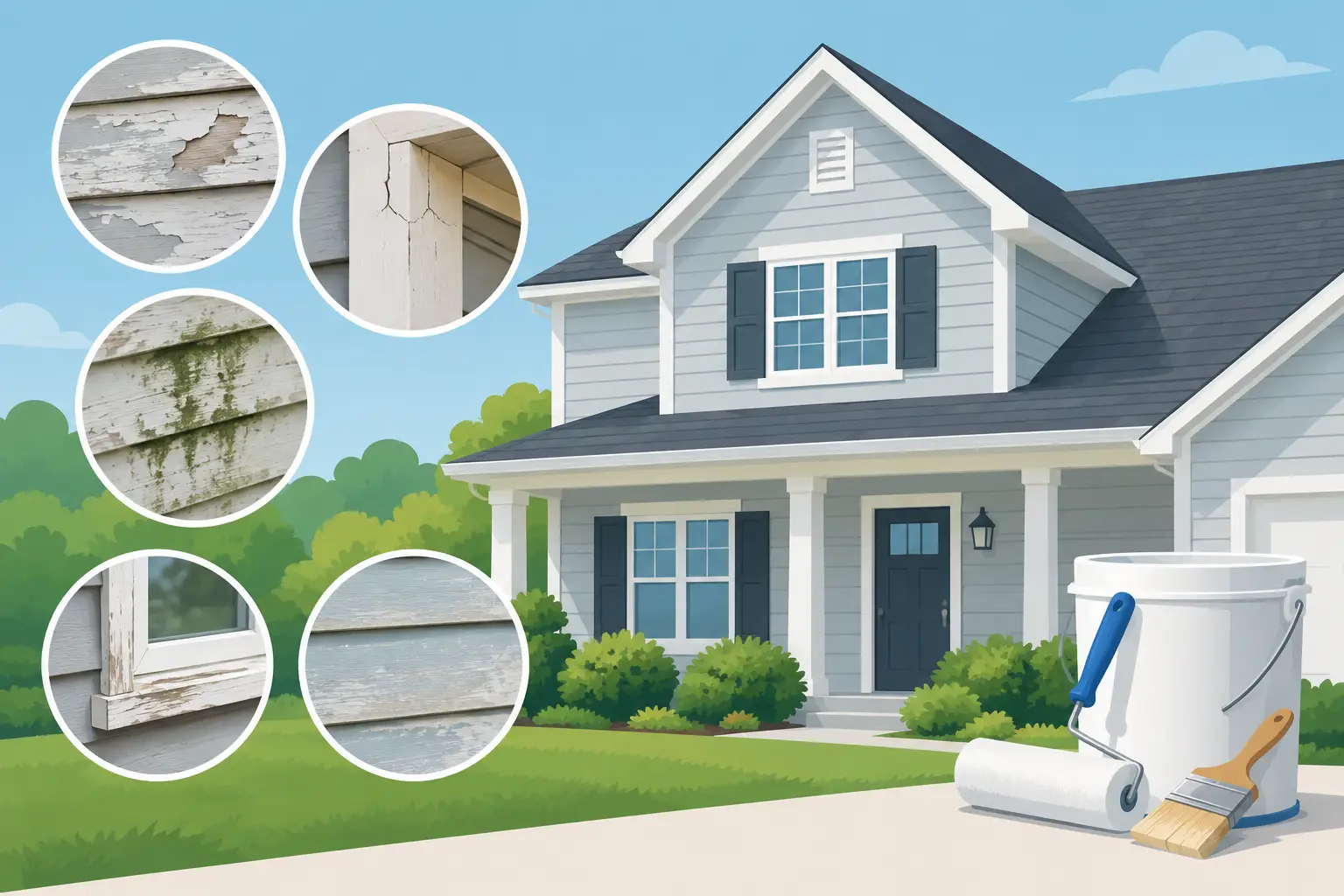
At Sharp Painting Services, preparation is planned around the condition of each surface rather than rushed to reach the painting stage. Loose and peeling paint is removed, damaged areas are repaired, cracks are filled where appropriate, and surfaces are sanded to create a stable base. Mold or mildew must also be treated before painting, as a fresh coating will not solve an active surface problem.
Bare areas need attention before the final color goes on. Exposed timber may require a suitable wood primer or sealer. Bare metal needs corrosion control. Powdery, chalky painted surfaces may need stabilizing preparation or a bonding primer. Masonry can require a primer designed to manage porosity and promote even adhesion.
Skipping these steps may reduce the initial quote, but it often increases maintenance costs later. A clean job site and punctual completion are important, yet durability should never be sacrificed for speed.
The value of two finish coats
For a long-lasting exterior result, two full finish coats are usually the right approach. The first coat begins building coverage and protection, while the second helps create a more even, continuous paint film. This is especially valuable on weather-exposed walls, fascias, eaves, and trim.
One coat can sometimes be appropriate for a maintenance refresh where the existing finish is sound and the color change is minimal. However, it should not be treated as the default for a coastal property that needs dependable protection. Coverage, color change, surface condition, and manufacturer requirements should guide the specification.
Choosing the Right Finish for Coastal Exteriors
Sheen level affects both appearance and maintenance. Flat and low-sheen finishes can give broad exterior walls a refined look and help disguise minor surface imperfections. They are often a good choice for rendered walls and fiber cement cladding, provided the selected product is made for exterior use.
Satin or semi-gloss finishes are commonly used on doors, trim, gutters, railings, and other detailed elements. Their tighter surface can be easier to wash, which is useful where salt and grime accumulate. The trade-off is that higher sheen can reveal more surface imperfections, so repairs and sanding need to be particularly careful.
Very glossy finishes can look striking on selected features, but they are not always the most practical choice for large exposed areas. They highlight unevenness and require meticulous substrate preparation. A balanced finish schedule usually delivers a better-looking, easier-to-maintain coastal home.
What About Marine Paint?
Marine-grade paints and two-part epoxy coatings are designed for demanding environments, but they are not automatically the best choice for every house exterior. Some are highly specialized products intended for boats, industrial steel, or particular metal structures. They can be difficult to apply, may have strict surface-preparation requirements, and are not always suitable for timber, render, or previously painted residential surfaces.
For most homes, a premium architectural exterior acrylic system, paired with the correct primer where needed, offers the right balance of durability, appearance, repairability, and long-term maintenance. Specialized coatings should be considered for particular metalwork or unusually exposed structures, not as a blanket solution.
A Maintenance Plan Extends the Life of Coastal Paint
Even the best paint will benefit from regular care near the ocean. A gentle fresh-water wash of exterior walls, trim, and metal features helps remove salt deposits before they build up. The frequency depends on how close the property is to the shoreline, its exposure to prevailing winds, and how sheltered it is by neighboring buildings or vegetation.
Inspect the exterior periodically for cracking caulk, peeling edges, bubbling paint, and rust spots. Addressing a small failure early is simpler and more affordable than waiting for moisture to reach timber or corrosion to spread beneath the coating. Pay close attention to window sills, exposed fascia boards, balcony railings, gates, and joins where water can collect.
Color choice also deserves practical consideration. Dark shades can look impressive, but on sun-exposed elevations they absorb more heat and may place extra stress on timber and some cladding materials. A well-chosen mid-tone or light color can be a sensible option where heat and fading are ongoing concerns.
The right coastal paint is not a shortcut or a one-size-fits-all product. It is a carefully selected exterior system, applied to a properly prepared surface and maintained before small defects become larger repairs. That approach keeps a coastal property protected, polished, and ready to withstand the next season of salt, sun, and wind.