
A garage is often the hardest-working room on the property. It carries hot tires, oil drips, stored tools, bikes, sporting gear, and the constant scuffing that comes with daily use. Well-chosen Frenchs Forest garage coatings turn that neglected area into a cleaner, brighter, more durable space that is easier to maintain and better suited to how you actually use it.
The right result is not simply about applying a glossy coating over concrete. Garage floors and walls need careful assessment, detailed preparation, and materials selected for the condition of the surface. When those fundamentals are handled properly, the finish can lift the appearance of the whole home while giving the space practical protection from wear.
What Garage Coatings Can Improve
Garage coatings typically refer to protective finishes applied to concrete floors, walls, or both. On floors, they create a hard-wearing surface that helps reduce dusting, staining, and the worn appearance of bare concrete. On walls, durable paint systems can make marks easier to wipe away and bring more light into an enclosed, functional room.
For many Frenchs Forest homeowners, the visual difference is immediate. A clean, even floor and freshly finished walls make it easier to organize storage, use the garage as a workshop, or simply enjoy arriving home to a well-kept space. For landlords and property managers, a garage refresh can also improve presentation between tenancies and address surfaces that appear tired before the rest of the property does.
Protection matters just as much as appearance. Bare concrete is porous, which means it can absorb spills and generate fine dust over time. A suitable coating system provides a more sealed surface, although no finish is completely maintenance-free or indestructible. The best choice depends on traffic levels, the age and condition of the slab, moisture exposure, and whether the garage is used mainly for parking, storage, or active projects.
Frenchs Forest Garage Coatings Start With Preparation
Preparation is where long-lasting coatings are won or lost. A floor can look excellent on day one yet peel, bubble, or wear unevenly if the surface beneath has not been properly cleaned and prepared.
Before any coating is selected, the concrete should be checked for oil contamination, old paint, cracks, surface weakness, and signs of moisture. Oil spots, for example, must be treated thoroughly because coating over contamination can affect adhesion. Existing flaky paint needs to be removed or stabilized. Small cracks may need repairing, while larger movement cracks may require a more considered approach depending on their cause.
Concrete also needs the right surface profile for a coating to grip. In some cases, mechanical grinding is the most reliable way to remove weak material and create a clean, even base. Acid etching may suit certain sound slabs, but it is not a shortcut for poor preparation. Dust must then be removed carefully, because a clean work area is part of achieving a smooth, professional finish.
Moisture deserves particular attention. Concrete can hold moisture even when it looks dry at the surface. If a slab has an ongoing moisture issue, some coating systems may not be appropriate without a compatible moisture barrier or further investigation. An honest assessment at the start helps avoid spending money on a finish that is unlikely to perform as expected.
Floor Coatings Are Not All the Same
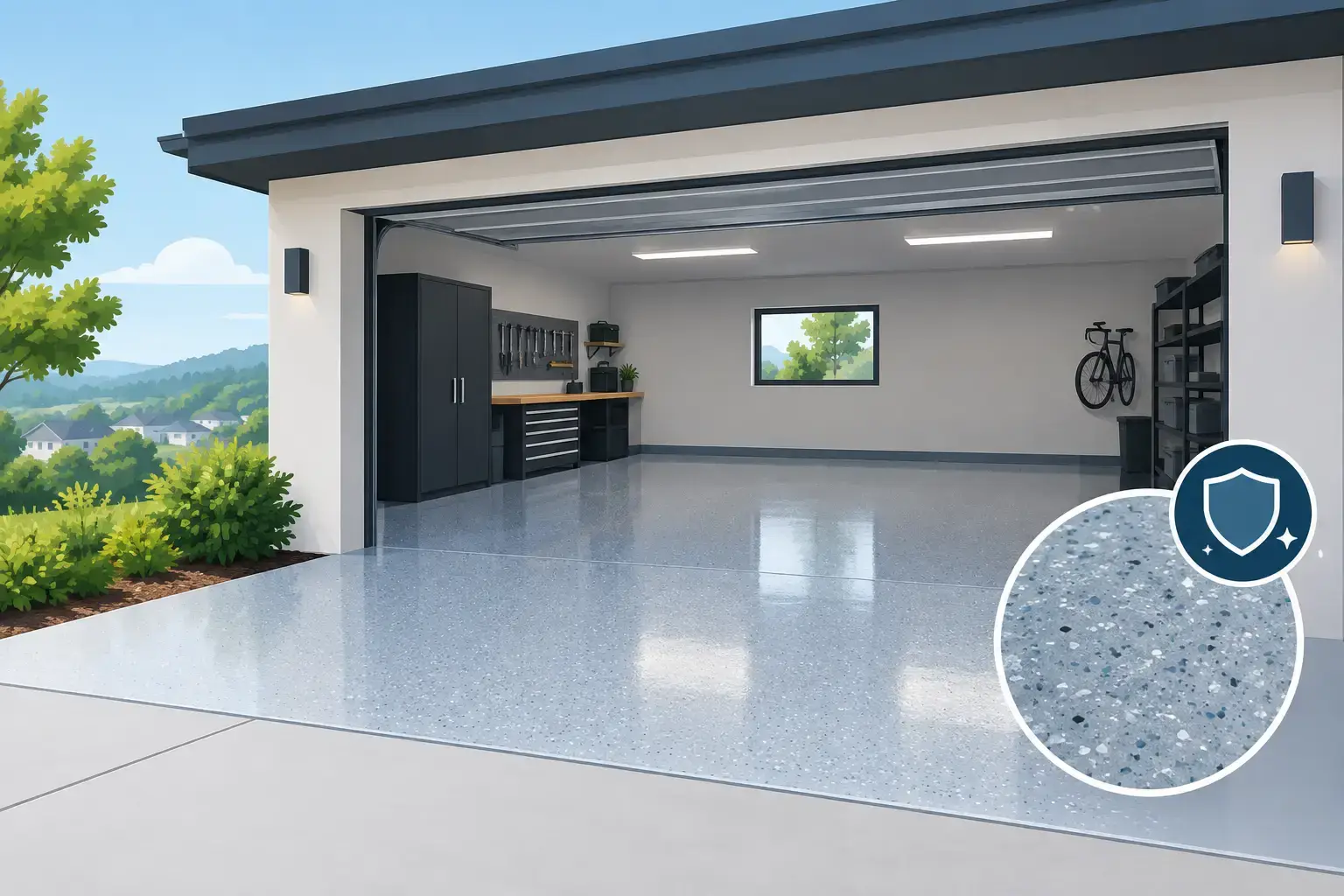
Epoxy is a familiar option for garage floors because it can produce a tough, attractive finish with strong resistance to many common household spills. It is available in solid colors and decorative flake systems that add texture and help disguise minor dirt or marks. A properly specified epoxy system can be an excellent option for garages with normal residential use.
Polyaspartic and polyurethane topcoats may be considered where faster curing, increased UV stability, or particular durability characteristics are required. These systems can be well suited to specific conditions, but they are not automatically the best answer for every garage. Product selection should follow the condition of the slab and the intended use of the room, not a one-size-fits-all sales pitch.
A decorative flake floor is popular because it gives the surface depth and a more finished appearance than plain gray concrete. It also makes dust and small marks less noticeable than a single solid color. However, the level of texture should be chosen with care. Too much texture can make cleaning more difficult, while too little may not provide the grip desired in an area that can become wet.
Walls Need a Practical Finish Too
A garage wall coating should be more durable than a standard low-sheen interior finish used in a quiet bedroom. Scuff-resistant paint in a washable finish helps the room stand up to stored items, wheelie bins, garden equipment, and everyday contact.
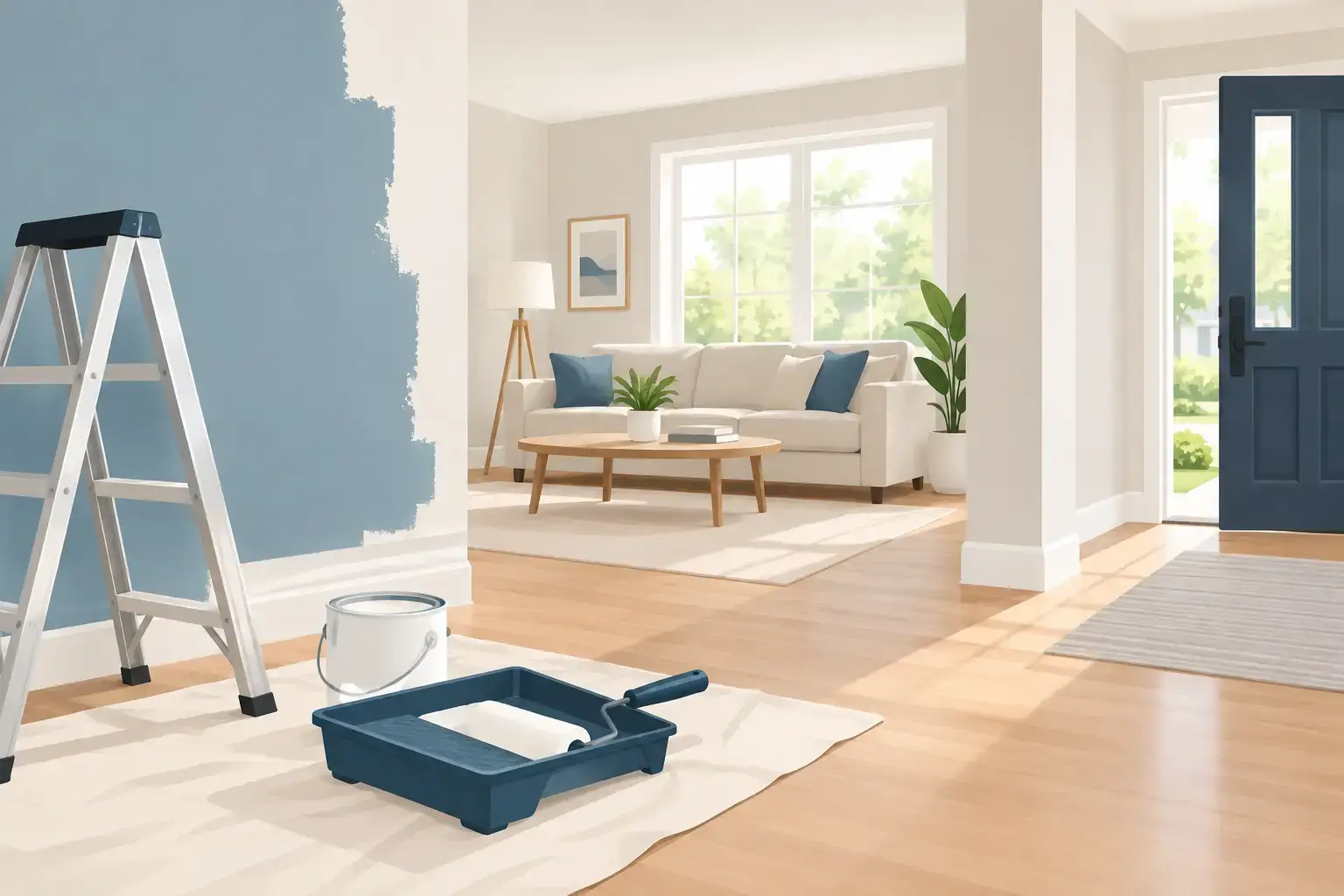
The finish should still suit the light in the room. Lighter neutral shades can make a compact garage feel more open, while a slightly deeper color on a lower wall section can be practical in a workshop or storage area. Any wall cracks, dents, nail holes, and damaged plaster should be repaired before painting so the refreshed floor is not paired with unfinished-looking walls.
Choosing the Right Finish for How You Use the Garage
The right garage coating depends on the space, not just the look you saw in a project photo. A garage used only for parking and general storage has different needs from one used for woodworking, home fitness, or weekend vehicle maintenance.
For a family garage, a mid-tone flake coating can be a smart balance of presentation and practicality. It is forgiving between cleans, adds visual interest, and can complement a freshly painted interior. If the garage doubles as a workshop, prioritize stain resistance, ease of cleaning, and a finish that does not become overly slippery when wet.
For properties close to bushland or exposed to frequent dirt and debris, wall finishes and floor colors should be selected with realistic maintenance in mind. A very pale, high-gloss surface may look sharp initially, but it can show tire marks and dust more readily. A well-chosen satin wall finish and a balanced floor color often deliver a more usable long-term result.
A Clean Process Protects the Rest of Your Property
Coating work can involve grinding, repairs, cleaning, and curing time. A professional approach keeps those stages organized and minimizes disruption. Furnishings and stored items should be moved or protected, adjoining surfaces masked carefully, and dust control managed throughout the preparation stage.
Clear communication also matters. Homeowners should know what needs to be removed before work begins, how long the floor must cure before foot traffic or vehicles return, and what aftercare the new finish requires. Cure times vary by product and weather conditions, so promises to park on a newly coated surface the next morning should be treated cautiously unless the specific system supports it.
At Sharp Painting Services, the focus is on careful preparation, high-quality materials, tidy work practices, and a finish that suits the property rather than a rushed cosmetic fix. That approach is especially valuable in garages, where the surface has to work hard every day.
Simple Care Helps the Finish Stay Sharp
Once the coating has cured fully, regular care is straightforward. Sweep away grit before it is ground under tires, clean spills promptly, and use a mild cleaner recommended for the coating system rather than harsh solvents or abrasive tools. Placing protective pads under heavy shelving or equipment can also help prevent concentrated damage.
If the floor suffers a deep impact, persistent tire marking, or a new crack develops, address it early. Small issues are usually easier to assess and repair before moisture or repeated traffic affects a larger area.
A garage does not have to remain the unfinished part of an otherwise well-maintained home. With the right preparation and finish, it can become a clean, durable space that works harder, looks better, and feels properly connected to the rest of the property.