

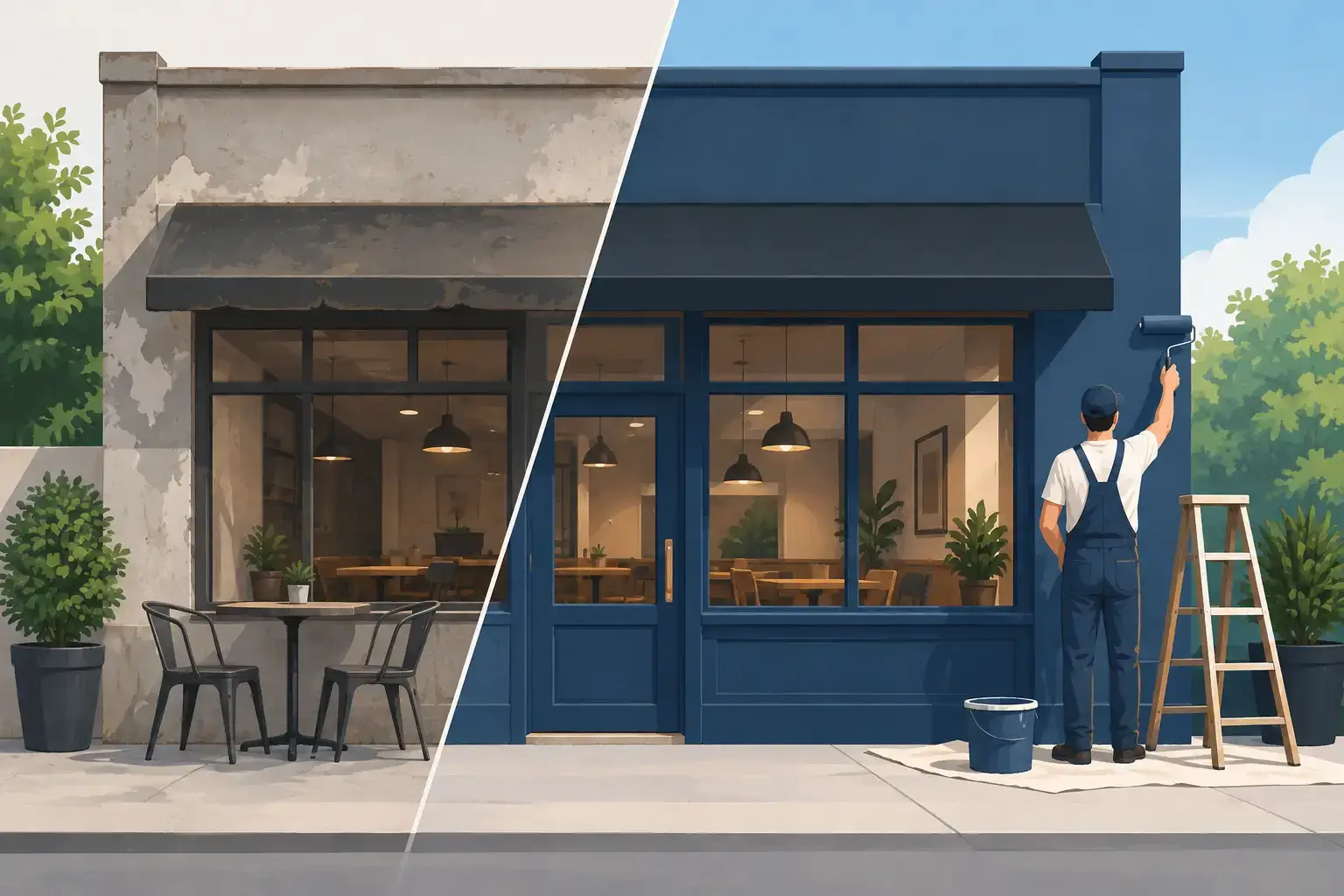
A Manly cafe repainting example is rarely just about choosing an appealing wall color. For a working hospitality venue, repainting needs to refresh the customer experience while protecting trading hours, managing odors and dust, and delivering a finish that stands up to daily cleaning, chair scuffs, steam, sunlight, and coastal air.
Consider a typical independent cafe near the beach. The food is good, the staff are welcoming, and regulars fill the tables each morning. But after several busy years, the paintwork has started telling a different story: marks around table edges, greasy buildup near the service counter, chips on timber trims, and a tired exterior that no longer reflects the quality of the business inside.
A professional repaint can change that impression quickly. The key is treating the work as a planned commercial project, not a simple coat of paint over an operating business.
The starting point: a cafe that looked more worn than welcoming
In this representative Manly cafe repainting example, the venue had a compact dining room, a front counter, a small hallway to the restrooms, and an exterior entry zone exposed to salt air and strong afternoon light. The owner wanted a brighter, cleaner feel without turning the cafe into a completely different brand.
The existing palette was warm but dated. Cream walls had yellowed unevenly, dark trim made the narrow room feel smaller, and several previous touch-ups showed as visible patches under the pendant lighting. Behind the counter, washable paint had been applied years earlier, but constant cleaning had dulled the sheen and revealed fine surface imperfections.
The brief was practical: keep the cafe recognizable, improve the sense of light and cleanliness, use finishes suited to hospitality wear, and complete the work around service hours. This is where a detailed site inspection matters. Paint colors and finish types cannot be selected properly until the condition of each surface, lighting direction, ventilation, and daily use of the space have been assessed.
Planning repainting around a live business
For a cafe, the most expensive part of repainting is often lost trading time. A good plan should protect revenue as carefully as it protects floors and furniture. Depending on the scale of the work, that may mean completing preparation and painting after closing, scheduling exterior work during quieter periods, or dividing the project into zones so part of the venue can remain operational.
In this example, the interior dining area and counter frontage were completed over several evenings, with final detailing scheduled before the cafe opened. The exterior entry was handled separately to avoid blocking customer access. Furniture was moved and covered, floors were protected, and equipment near painted surfaces was shielded from dust and overspray.
There is a trade-off here. Working after hours can reduce disruption to customers, but it requires disciplined timing and a clear sequence of work. It also makes product selection more important. Low-odor, low-VOC paints are generally more suitable for occupied commercial spaces, while fast-curing products can help the area return to use sooner. The right choice depends on ventilation, surface condition, drying time, and the level of durability required.
Preparation made the difference
Fresh paint will not hide loose coatings, greasy residue, dents, or failed caulking for long. In a cafe environment, preparation has to account for more than ordinary dust and fingerprints. Surfaces around food service areas can carry airborne oils, while high-contact zones are likely to have repeated scuffing and small impact damage.
The work began with a thorough clean of walls, trims, and the counter exterior. Flaking paint was removed, minor dents and cracks were filled, and rough patches were sanded smooth. Gaps around trim and joinery were caulked where needed to create a cleaner line. Areas showing uneven repairs received the appropriate spot priming so they would not flash through the final coats.
This stage can feel slow to a business owner eager to see the transformation, but it is where a professional result is won or lost. Careful repairs give painted surfaces a uniform appearance under direct light, and proper cleaning improves adhesion. Skipping either step may save time on day one, but it usually leads to premature wear and more frequent touch-ups.
Choosing colors that support the cafe experience
The new scheme needed to work with the cafe’s timber tables, black metal seating, and existing signage. Rather than using a bright white throughout, the main dining walls were imagined in a soft warm white. This keeps the room open and clean without feeling clinical, especially under warm interior lighting.
A muted coastal green on a feature wall created a visual point of interest behind the banquette seating. The color gave the room personality while remaining calm enough for a neighborhood cafe. Dark charcoal was retained in small amounts on selected trims and the lower counter detail, where it helped conceal everyday marks and tied in with the furniture frames.
For many cafes, an all-white scheme sounds like the easiest option. It can be effective in a naturally bright room, but it also shows scuffs quickly and can feel harsh at night. Conversely, a very dark palette can look sophisticated but may make a small venue feel enclosed. The best balance comes from considering the size of the space, natural light, artificial lighting, brand identity, and how often surfaces will be cleaned.
Finish selection is about maintenance, not just appearance
Different finishes were used according to the demands of each area. A durable washable low-sheen finish suits dining walls because it offers a refined appearance while allowing routine cleaning. Higher-contact areas, such as the hallway and lower wall sections near seating, benefit from coatings chosen for greater scrub resistance.
Trim, doors, and counter details need a tougher finish than standard wall paint. These surfaces receive knocks from bags, chairs, deliveries, and cleaning equipment. A quality enamel or water-based trim coating can provide a crisp, durable finish while reducing the yellowing and odor concerns associated with some older product systems.
Exterior areas require another level of consideration in Manly. Salt air, moisture, UV exposure, and wind-driven grime all place pressure on coatings. Exterior preparation, primers, and topcoats should be selected as a compatible system for the specific substrate, whether it is timber, masonry, metal, or previously painted joinery. Paint is not a substitute for repairing water entry or deteriorated building materials, so any underlying maintenance issue should be addressed first.
The visible transformation came from the details
Once the repaired and primed surfaces were ready, the painting phase moved efficiently. Clean cutting-in around joinery, consistent roller application, and adequate drying time between coats produced an even finish without lap marks or patchiness. The counter frontage received particular attention because it was visible to every customer ordering coffee.
The result was not an overdesigned makeover. It was a cafe that looked cared for again. The lighter walls improved the sense of space, the feature color added character, and the refreshed trim brought definition back to the room. Just as importantly, the finish was selected to be practical for staff to maintain during a busy week.
A final walkthrough should be part of every commercial repainting project. It is the time to inspect edges, check repaired areas in the venue’s normal lighting, remove protective coverings, return furniture carefully, and leave the site clean for the next service. For a cafe owner, reopening to a tidy, polished space matters as much as the paint itself.
What cafe owners can take from this example
The strongest lesson from this Manly cafe repainting example is that repainting works best when it supports the way the venue actually operates. An attractive color scheme is valuable, but it needs the right preparation, durable products, a realistic work schedule, and attention to the surfaces customers and staff touch every day.
Sharp Painting Services approaches commercial spaces with that balance in mind: clear scope, careful protection, quality materials, skilled preparation, and a clean handover. Whether a cafe needs a subtle refresh or a more complete change of direction, a well-planned repaint can help the space feel as considered as the service it provides.
The best time to plan the work is before the marks, moisture damage, and tired finishes become part of the customer experience. A thoughtful repaint gives a good local cafe the backdrop it deserves, without asking the business to compromise on the details that keep it running.