

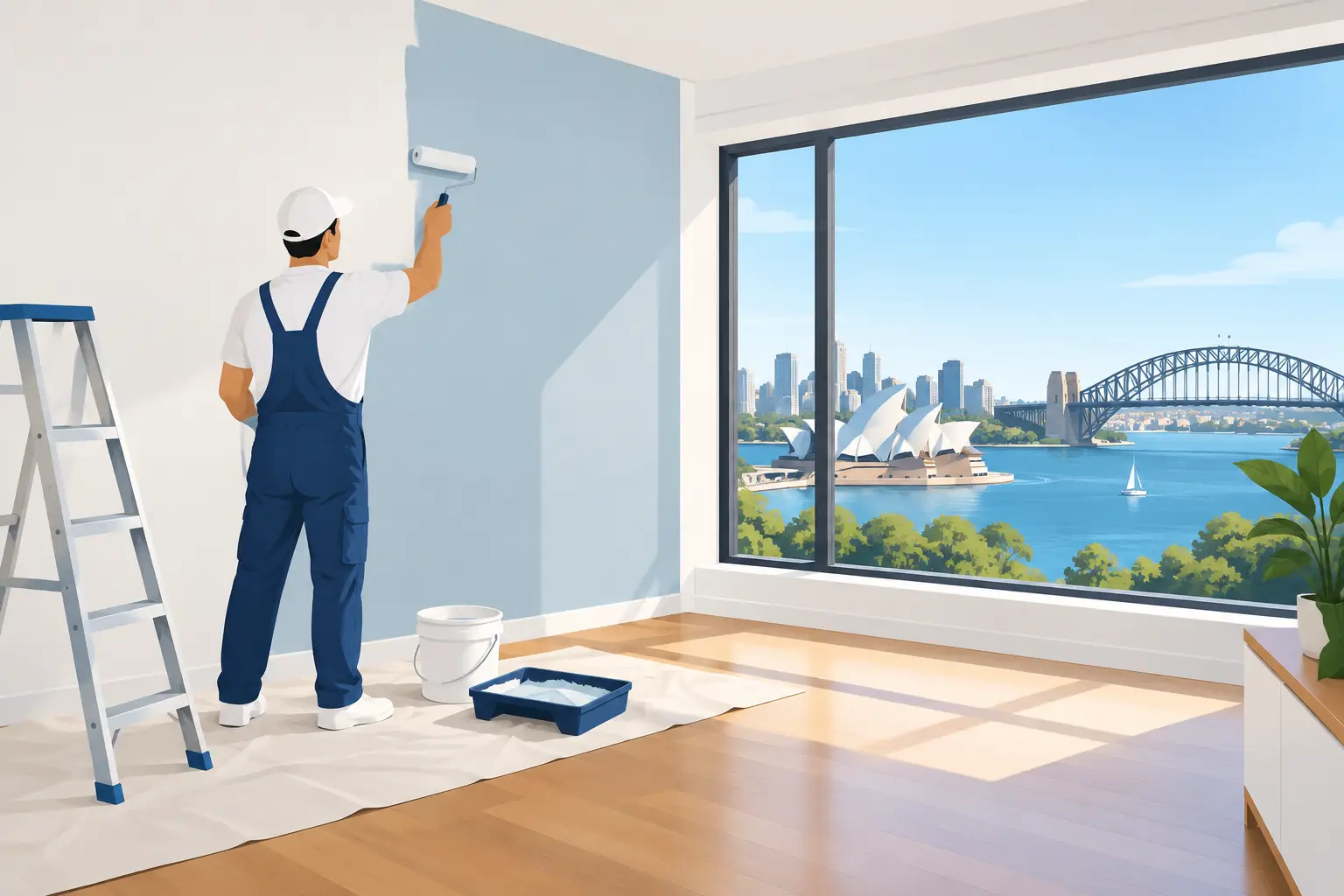
A vacant rental can look tired surprisingly quickly. In this rental repainting example, a two-bedroom apartment needed more than a quick coat over the walls: it needed repairs, careful finish selection, and a clean handover before new tenants moved in. The goal was simple – present the property at its best without creating unnecessary delays or costs.
For landlords and property managers, repainting between tenancies is both a presentation decision and a maintenance decision. Fresh paint can help a listing photograph better, support a stronger first impression at inspections, and protect surfaces that have taken years of everyday wear. The quality of the result, however, depends heavily on what happens before the first coat is applied.
The Property at the Start
This example involved an apartment in Sydney’s Northern Beaches that had been occupied for several years. The walls were generally sound, but the property showed the familiar signs of a completed tenancy: scuff marks along hallways, picture-hook holes, greasy marks near light switches, minor dents in plaster, and paint discoloration around furniture lines.
The ceilings were in reasonable condition, while the bathroom ceiling had early signs of moisture staining. Several doors had chipped edges, and the skirting boards were marked from vacuum cleaners, luggage, and everyday foot traffic. None of these issues required major building work, but leaving them untreated would have made a new coat of paint look rushed.
A professional inspection separated normal wear from areas that needed real attention. That distinction matters. Repainting every surface is not always necessary, especially when a property has been well maintained. But spot painting can be difficult to blend if the existing paint has faded, been touched up with a different sheen, or has an unknown color history. In this case, repainting the full walls in the main living areas delivered a more consistent finish and better value than chasing individual marks.
Rental Repainting Example: The Recommended Scope
The agreed scope focused on the areas that would have the greatest visual impact for incoming tenants. It included the living room, hallway, bedrooms, bathroom ceiling, internal doors, frames, and skirting boards. Kitchen cabinetry and tiled surfaces were not included because they were in good condition and did not need repainting.
The walls received a washable low-sheen finish in a soft neutral tone. This choice gave the apartment a clean, contemporary appearance without being too stark. Low sheen is a practical option for rental interiors because it is more forgiving than higher-gloss finishes while remaining easier to wipe down than flat paint.
A crisp semi-gloss finish was used on the doors, frames, and skirting boards. These harder-working surfaces benefit from a more durable coating, particularly in hallways and entry areas. The bathroom ceiling received a moisture-resistant ceiling paint after the staining had been treated and the room had been checked for adequate ventilation.
The final scope was based on condition, not a one-size-fits-all package. A recently refreshed apartment may only need selected walls and touch-ups. A property being prepared for sale, or one with heavy wear across multiple rooms, may justify a more comprehensive repaint. A detailed quote should explain exactly what is included so there is no confusion about rooms, surfaces, repairs, or the number of coats.
Preparation Made the Difference
Paint cannot hide every flaw. It can soften minor imperfections, but it will not correct loose material, dents, cracks, greasy residue, or poorly repaired holes. For this apartment, preparation accounted for a significant part of the work.
First, furnishings and flooring were protected. Even in a vacant property, floors, benchtops, built-in cabinetry, and fixtures need careful masking and covering. The team then cleaned affected wall areas, removed loose paint from chipped trim, filled picture-hook holes and small dents, and sanded repairs smooth. Small gaps around trim were caulked where appropriate to create neater, more finished lines.
The bathroom ceiling required extra care. Moisture marks were cleaned and sealed before repainting so the discoloration would not bleed through the new finish. Simply painting over a stain may look acceptable on day one, then reappear a few weeks later. The correct primer and preparation step help prevent that avoidable problem.
This is where quality materials and disciplined application work together. Two coats of a suitable topcoat provide more dependable coverage, color consistency, and durability than a thin single coat applied to save time. There are exceptions, such as a small touch-up using the exact existing paint, but a full repaint should be planned for a finish that lasts.
Keeping Turnover on Schedule
Timing is often the central concern with rental repainting. A landlord wants the property ready for advertising or move-in quickly, while a property manager needs confidence that the work will be completed as promised. The best approach is to inspect the property as soon as it becomes vacant, confirm the scope, and schedule painting around cleaning, maintenance, and photography.
In this example, repairs and surface preparation were completed first, followed by painting over consecutive days. Once the coatings had dried, the team completed a final walkthrough, removed protection, cleaned the work areas, and checked walls and trim in natural and artificial light. This last check is valuable because missed marks, rough patches, and inconsistent edges can be more visible once a room is empty.
Coordination also prevents trades from undoing one another’s work. If an electrician needs to replace fittings, a plumber has a repair planned, or carpets are being changed, those tasks should be considered before the painting schedule is locked in. Good communication can prevent fresh walls from being scratched, patched, or marked by later work.
Choosing Colors for a Rental Property
Neutral does not have to mean bland. The most successful rental palettes tend to create a bright, calm backdrop that works with different furniture styles and gives prospective tenants room to picture themselves in the home. Warm whites, soft greiges, light sandy tones, and restrained pale grays are often reliable choices.
The right color depends on the apartment’s natural light, flooring, kitchen finishes, and outlook. A cool gray that looks clean in a bright coastal living room may feel flat in a shaded bedroom. Likewise, a pure white can make older trim or cream tiles appear more yellow by comparison. Testing sample colors in the actual room, at different times of day, is a sensible step before committing to the full repaint.
For this apartment, the selected neutral wall color brightened the living spaces while working with existing flooring and joinery. Keeping one wall color through the main rooms also made future touch-ups and maintenance simpler. Consistency is practical in a rental, but ceilings, trim, and wet areas can still use finishes chosen specifically for their job.
What Affects the Cost of Rental Repainting?
The size of the property matters, but it is not the only factor. Condition, access, repair requirements, surface type, paint specification, and scheduling all influence the final price. An empty, well-maintained apartment with clear access can be completed more efficiently than a furnished property with extensive patching, smoke staining, or difficult parking and stair access.
It is also worth considering the cost of poor preparation. A cheaper quote may exclude repairs, only allow for one coat, use lower-grade materials, or leave cleaning and protection unclear. Those shortcuts can result in visible patching, premature marks, paint failure, or a finish that does not match the standard of the rest of the property.
A transparent estimate gives landlords and managers a clear basis for comparison. It should identify the rooms and surfaces to be painted, preparation included, paint system, exclusions, and anticipated timing. This makes it easier to decide whether the work suits a basic tenancy refresh or a more thorough property upgrade.
A Better Handover for the Next Tenant
The completed apartment felt brighter, cleaner, and better cared for without losing the practical qualities required in a rental. Repaired walls no longer drew attention. Fresh trim sharpened the rooms, and the bathroom ceiling looked clean and properly maintained. Just as importantly, the property was left tidy and ready for final cleaning, photographs, and inspections.
Sharp Painting Services approaches rental work with this same focus on clear scope, careful protection, reliable scheduling, and a finish that holds up beyond the first inspection. For a single apartment or a broader portfolio refresh, the right repainting plan starts with an honest assessment of what the property truly needs.
A well-planned repaint is not simply a fresh color on the walls. It is a practical way to reset the condition of a home, reduce avoidable maintenance concerns, and give the next tenant a property that feels ready from the moment they walk through the door.